
John-Paul Himka In the mid-1980s everything began to change dramatically in the Soviet Union as a whole and, with some delay, also in the Ukrainian republic. The Brezhnev era, soon to be labelled “the period of stagnation,” came to an end when Leonid Brezhnev, who had served as general secretary of the Soviet Communist party … Continue reading General Secretary Mikhail Gorbachev
Redouble our efforts to achieve victory in Ukraine
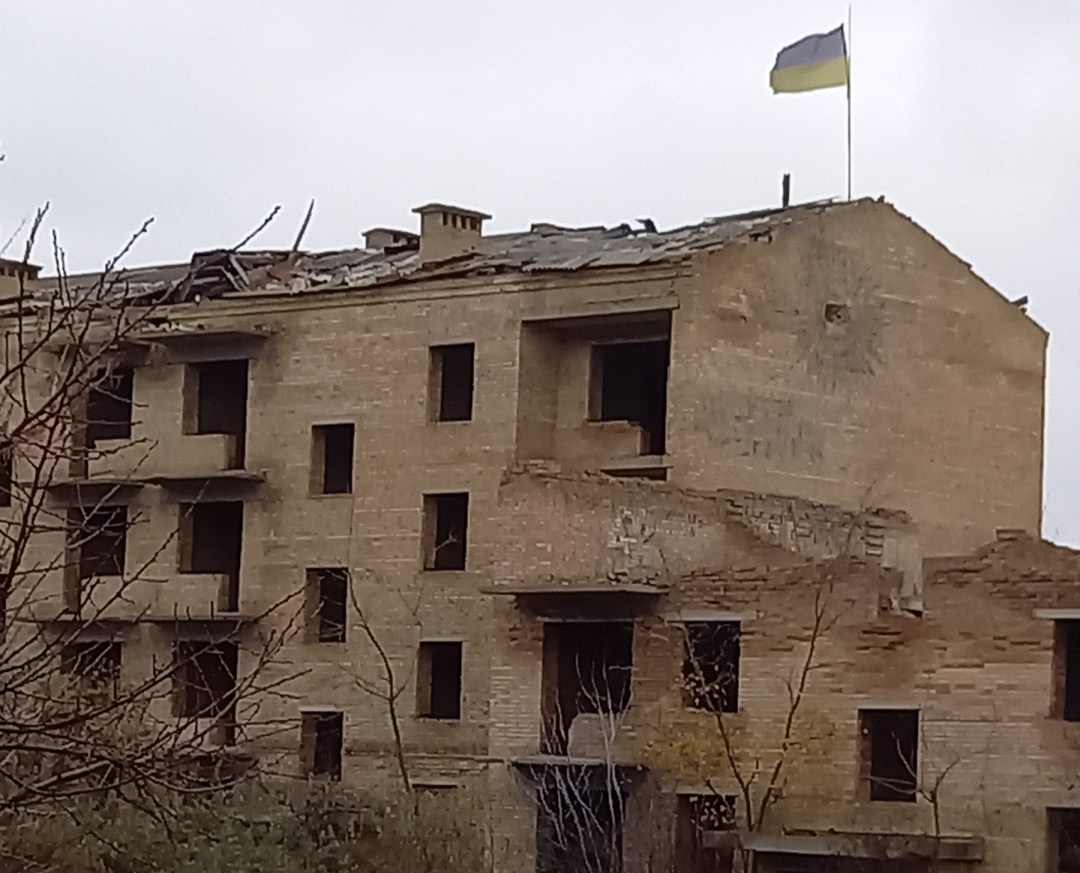
John-Paul Himka On 14 December 2023 President Vladimir Putin of Russia held a marathon four-hour press conference. Aside from the expected boasting, bluster, lies, and threats, I was surprised to find a very significant insight. The town of Horenka liberated from Russian occupation I will quote the relevant passage from that day’s New York Times: … Continue reading Redouble our efforts to achieve victory in Ukraine

A Memoir of Soviet Ukraine, 1983: Part 3
John-Paul Himka In this installment of my memoir, I want to talk about health and hygiene. Men drank a tremendous quantity of vodka. A joke from the time was: What’s the philosophical definition of nothing? Answer: a liter of vodka split four ways. I knew a prominent poet who liked to start his day … Continue reading A Memoir of Soviet Ukraine, 1983: Part 3
A Memoir of Soviet Ukraine, 1983: Part 2
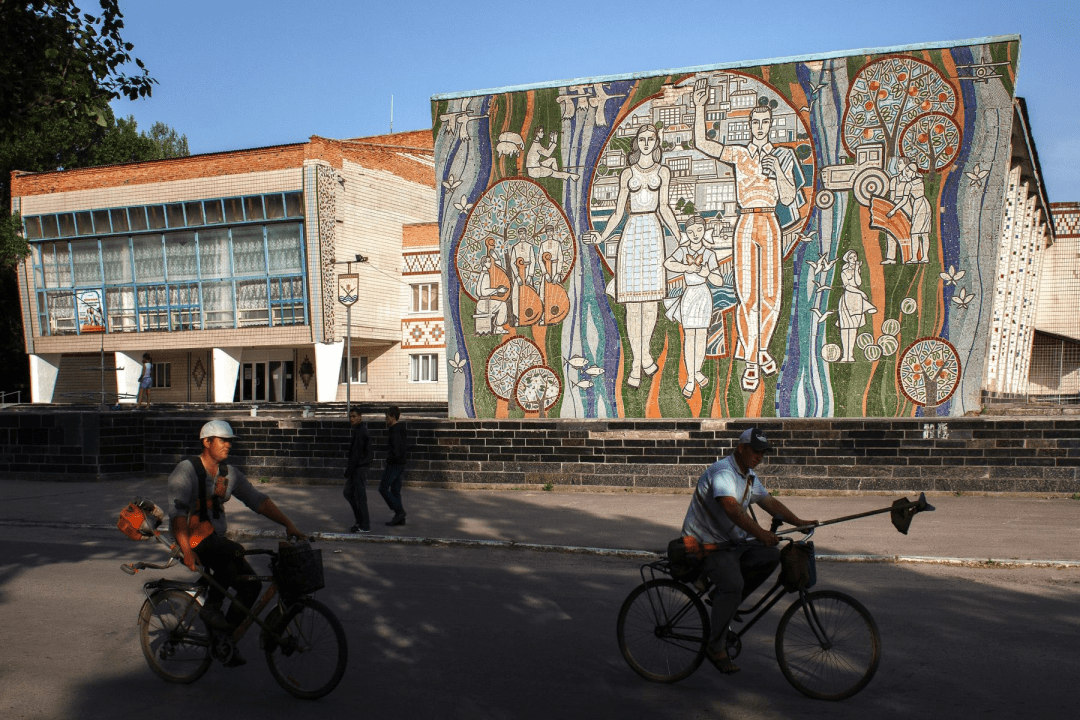
John-Paul Himka House of Culture, Kalanchak, Kherson Oblast. © Yevgen Nikiforov Soviet Ukraine in 1983 was no place for a foodie, unless you had friends and relatives who invited you over for meals. My wife and I were lucky – we had many relatives and some close friends, so we would be treated to local … Continue reading A Memoir of Soviet Ukraine, 1983: Part 2
A Memoir of Soviet Ukraine, 1983: Part I
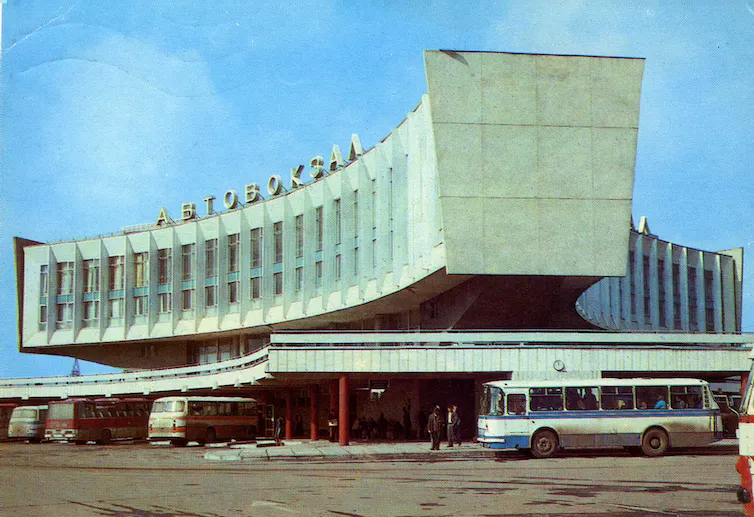
John-Paul Himka A Soviet-era postcard of the Lviv bus terminal. I spent the first half of 1983 in Soviet Ukraine, in Lviv mainly but also in Kyiv. I had just married Chrystia Chomiak two months previously, and off we went to Ukraine on a research trip organized by the International Research and Exchanges Board. For … Continue reading A Memoir of Soviet Ukraine, 1983: Part I

RUSSIFICATION IN SOVIET UKRAINE AFTER STALIN
John-Paul Himka The difference between the Stalinist and post-Stalinist policies of Russification is that Stalin dealt a series of spectacularly violent blows to the Ukrainian nation, while his successors intiated a relatively nonviolent but relentless and systematic program of reducing the sphere of Ukrainian language and culture and raising the prestige of Russian language and … Continue reading RUSSIFICATION IN SOVIET UKRAINE AFTER STALIN

The Ukrainian Nation in the Time of Lenin, Hitler, and Stalin
John-Paul Himka As many other nations, Ukrainians hoped to use the disintegration of the imperial order in the aftermath of World War I to establish their own state. Although Finns, Estonians, Latvians, Lithuanians, and Poles managed that task, and other East European nations formed federations (Czechoslovakia and Yugoslavia), Ukraine failed to gain independence. But there … Continue reading The Ukrainian Nation in the Time of Lenin, Hitler, and Stalin
UKRAINIANS UNDER THE TSARS
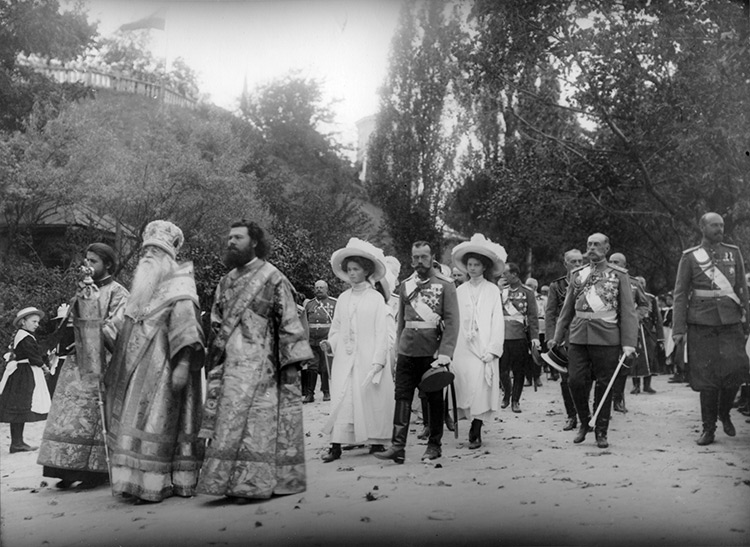
John-Paul Himka Tsar Nicholas II walks in the grounds of the Monastery of the Caves in Kyiv, 1911. Although many people think of Ukraine as part of Russia, Russia did not aquire any territories inhabited by Ukrainians until the late seventeenth century, in the aftermath of the cossack rebellion against Poland that erupted in 1648. At … Continue reading UKRAINIANS UNDER THE TSARS

Democratic Developments in Nineteenth-Century Ukraine
John-Paul Himka I estimate that in 1815 about 90 percent of those who used the Ukrainian language in their daily life were enserfed peasants. They were also the only ones who retained and continued to creatively develop traditional folkways. The Ukrainian elite in the Russian empire – mainly descendents of the former cossack officer class … Continue reading Democratic Developments in Nineteenth-Century Ukraine

What Might This War Do to Russia?
John-Paul Himka This is the third installment of a trilogy of texts from a historian’s perspective about the possibility of democratic change in Russia. In the first, I pointed out that Russia doesn’t have much of a democratic tradition in its political culture and that there have only been a few moments of potential transition … Continue reading What Might This War Do to Russia?
 Ukraine Solidarity Campaign (Кампанія Солідарності з Україною)