Founding Member of the Ukraine Solidarity Campaign
Obituary: Peter Duncan (1951–2026)
Founding Member of the Ukraine Solidarity Campaign
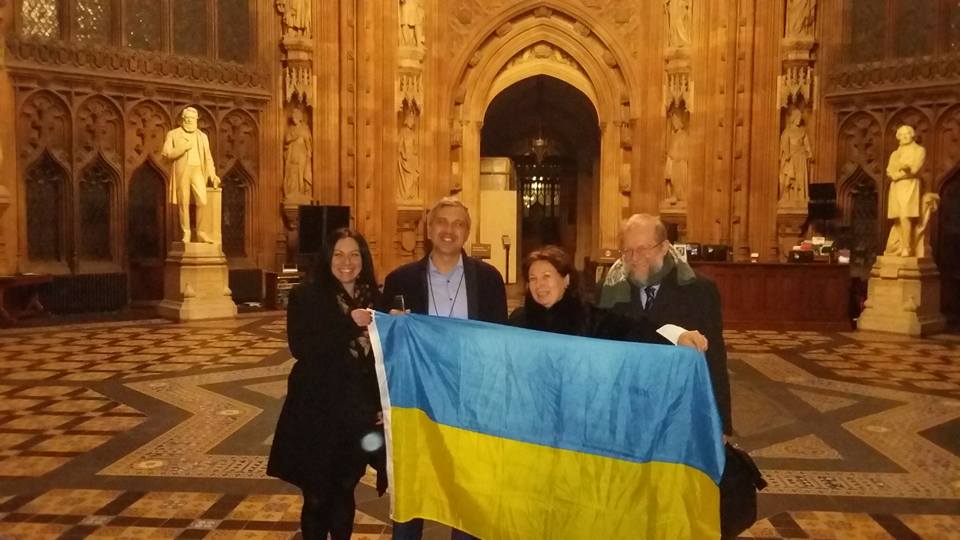
It is with deep sadness that we mark the death of our friend, comrade, and founding member of the Ukraine Solidarity Campaign, Peter “Pete” Duncan, who has died aged 72. Pete was a tireless advocate for democracy, internationalism, and the right of Ukraine to self‑determination.
A long‑standing member of the University and College Union, Pete played an important role in the successful effort to secure a principled, pro‑Ukraine position within the union. A committed democratic socialist throughout his adult life, he was active in the Labour Party on the anti‑Stalinist left and was a consistent supporter of internationalist, anti‑Brexit politics.
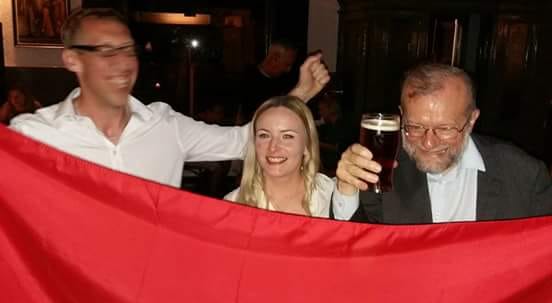
A distinguished scholar, Pete spent more than three decades at the School of Slavonic and East European Studies (SSEES), University College London, where he became one of Britain’s most respected experts on Russian politics and foreign policy. His books Soviet Union and India (1989) and Russian Messianism (2000) remain widely cited. In 2019, the House of Commons drew on his expertise to produce a report on Russian political interference and money laundering in the UK.
His encyclopaedic knowledge of the post‑Soviet world, combined with his generosity as a teacher, made him a central figure at SSEES. He served as Head of the Social Science Department, branch secretary of the UCU, and a long‑standing member of the Slavonic and East European Review editorial board.
Pete’s politics were inseparable from his scholarship. He was a fierce critic of the growing authoritarian axis represented by Trump, Putin, and their imitators, and he warned early of the dangers posed by resurgent fascism and the reactionary right. For Pete, solidarity with Ukraine was not an abstract principle but a moral imperative. From the first days of Russia’s full‑scale invasion in 2022, he was a regular presence at Ukraine Solidarity Campaign protests, meetings, and events—often attending despite serious ill health. His clarity, warmth, and humour were constants, even as his strength declined.
Beyond his public commitments, Pete was known for his kindness, hospitality, and ability to make others feel welcome. He was deeply loved by his students, comrades, and friends. His first wife, Luba, died in 2014. In 2018 he married Alexandra (Sasha) Zernova, a human rights lawyer, who has often attended USC events and shared his commitment to international solidarity.
Even after a cancer diagnosis in 2020, Pete continued to research, write, and engage in the struggles of the labour movement. His intellectual curiosity and political commitment never dimmed.
Pete is survived by Sasha. We extend our deepest condolences to her and to all who knew and loved him.
In honour of Pete’s lifelong commitment to internationalism and his early, principled stand for Ukraine’s right to resist Russian aggression, we reproduce an article originally printed in Chartist magazine. In that interview, Pete described the invasion as “a 1939 moment” and called on the labour movement to stand unequivocally with the Ukrainian people.
His words remain as urgent today as when he spoke them. His example will continue to guide us.
Eternal Memory. Solidarity Forever. Christopher Ford
(See also the Guardian‘s obituary of Peter)
Support Ukraine’s people!
This is a 1939 moment, says Pete Duncan, in surveying Ukraine’s continuing agony as Putin’s war crimes mount
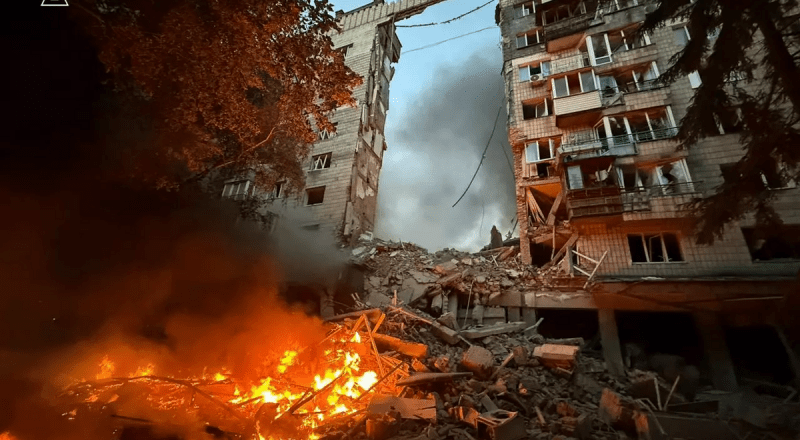
We may not see as much on television of the destruction and loss of life as we did in February, when Putin invaded Ukraine from north, east and south and tried to march on Kyiv. But the suffering of the people of Ukraine continues.
We do not see as many attacks by precision missiles on civilian targets – hospitals, theatres, blocks of flats, nursery schools. But they still go on. If there are fewer missile attacks, it’s not because the Russian military are feeling guilty, but because they’re running short of missiles. If Russia doesn’t cut off all the gas to Europe, it’s not because Putin feels sorry for German consumers, it’s because he wants Gazprom to carry on making some money.
If Putin allows Ukraine to export some of its grain, it’s not because he’s worried about world famine. It’s because he’s concerned about Russia’s reputation in countries in Africa and Asia. In the Central African Republic, Mali and Libya, one of Putin’s favourite oligarchs, Evgenii Prigozhin, has been using his private army to prop up corrupt governments in exchange for access to minerals. Furthermore, Russia wants to be able to export grain it has stolen from Ukraine and avoid Western sanctions on Russian agriculture.
As well as war crimes such as the wanton destruction of civilian targets and the stealing of Ukrainian property, the Russian puppet regimes in the Donbas have begun to illegally sentence prisoners of war to death. Fifty have already been killed in an explosion in a prison in Russian-occupied Donetsk, carried out by Russian forces trying to cover up their tortures and murders of Ukrainian POWs. Russia’s claim that Ukraine shelled their own prisoners repeats the claims made since the start of the war that the Ukrainians have been attacking their own civilians in order to blame the Russians. On this occasion, the Russians seem to be suggesting that the Ukrainians managed to separate the defenders of Azovstal from other POWs, even while the territory was under Russian control.
We know less about other war crimes in the occupied territories because Western journalists (other than those working for the Kremlin) do not have access. After Kherson was occupied in February, open protests continued for several months, but after repression and disappearances, resistance has been forced underground.
In the parts of the Donbas which have been occupied for eight years, there seems to be little internal resistance now. The Federation of Trade Unions of the so-called Luhansk People’s Republic has been incorporated into the Russian trade union Sotsprof. The Russian occupiers have forced thousands of local people to move to the Russian Federation, particularly to the far east where the population has declined since the collapse of the USSR, and to places like Nizhnii Tagil in the Urals where there is a major weapons factory. Where parents are suspected of disloyalty, their children have been removed and sent for ‘re-education’. As well as this kidnapping, a further war crime is the conscription of inhabitants of the occupied territories into the Russian Army or those of the local puppet regimes.
Inside the Russian Federation, ordinary people are suffering a spike in inflation and shortages of goods. Hundreds of thousands, possibly a million, have left the country to get away from the war and the shortages. The idea that Russia could produce its own substitutes for all imports is an illusion, as Western boycotts affect what inputs Russia can buy abroad and especially the necessary technology. Workers are being forced to work overtime to meet the needs of war, even though Putin has so far not dared to declare a full military mobilisation. To do so would give the lie to his continuing claim that there is no war, only a ‘special military operation’. The possibility that veterans could be called up might lead to a new round of protests, such as there was in February.
The closure of all critical media inside Russia has made it harder for Russians to access reliable information, though it is still possible to connect with international news sources via virtual private networks.
Aleksei Gorinov, a member of a district council in Moscow, told a council meeting that Russia was fighting a war of aggression in Ukraine. For this he was sentenced in July to seven years in prison, supposedly for ‘discrediting the Russian army’, under the law passed earlier this year which makes it illegal to describe Russia’s actions in Ukraine as a ‘war’.
Russian oil and gas companies appear to have been benefitting from higher prices, as in the West. This means that the government has received more in taxes from them than previously. In the longer run, however, Russian firms are being shut out of Western markets. China is not an alternative for Russia. The market for Russian oil and gas is limited; new pipelines will take years to build. Significantly, many Chinese private companies have, in practice, joined in Western sanctions on Russia, because they fear themselves being sanctioned by Western countries.
So far, the EU, NATO states and other democracies have shown an unexpected degree of solidarity in support of Ukraine. The British government has been at the forefront of these efforts. We must nevertheless expose any backsliding on sanctions by the Conservative government for the benefit of their rich backers. Labour should support the proposals of the House of Commons Foreign Affairs Committee report in June, which called for strengthening the capacity to investigate illicit finance and money laundering through London.
Much credit is due to the Greens in Germany for their contribution in changing public opinion there and persuading the SPD-led coalition government to begin the process of weaning the country off Russian oil and gas. This winter will undoubtedly be a test as the sanctions will be blamed for the high, possibly cripplingly high, prices of gas and electricity. After that, it will be easier to source alternative sources of oil and gas. Labour must use this crisis to demand a lasting shift to greener sources of energy. Linked with this, our front bench must reassert the manifesto policy of the social ownership of the major energy suppliers.
Our support for Ukraine should not mean uncritical support for the present government. In July, the Verkhovna Rada (parliament) passed two laws restricting workers’ rights, under cover of the war, removing gains made in the Soviet period. Zero-hours contracts have been legalised and the eight-hour day abolished. Small and medium-sized enterprises, representing 70% of the workforce, are now exempt from the labour code. Trade unions have lost their right to veto sackings. Workers have to bargain individually with their bosses. It is clear that these laws are not intended to be limited to the period of the war. Rather, their advocates represent them as representing a break from Communism.
It is unfortunate that the Stop the War Coalition, Jeremy Corbyn and the Morning Star refuse to commit themselves to the victory of Ukraine, the defeat of Russia and the return to the frontiers which Russia recognised in 1991. Putin will claim any agreement which permits further seizure of Ukraine’s territory beyond Crimea as a victory. If Putin is not defeated, he will have time to develop his war economy and train more soldiers. When he’s ready, he will launch further attacks on Ukraine. If he succeeds in his aim of installing a puppet government in Kyiv, he will seek to conquer the whole of Ukraine and Moldova. If he’s allowed to do that, then he will consider that NATO is not a serious alliance after all. Next, he will attack the Baltic states, and then Poland. Making an agreement with him that sacrifices Ukraine’s interests would amount to appeasement.
It is vital to understand that we are not in a situation like that at the beginning of the First World War. The 1907 International Socialist Congress in Stuttgart rightly feared that Europe was moving towards a war between imperialist powers and called on the labour movements to stop the war. We are in a situation more akin to 1939, when socialists around the world united with liberals and conservatives to stop Nazism. Stalin betrayed this movement and did his deal with Hitler, which lasted until Germany attacked the Soviet Union. We cannot fail to notice that some of the people, and the Morning Star itself, who previously justified the Stalinist system are now, in effect, apologists for Putin.
Fortunately, Putin’s victory is far from guaranteed. At the moment, Putin is slowly running out of men and weapons. Labour, and socialist parties internationally, should call for the delivery to Ukraine of all the weapons that it needs to end Russian aggression and defeat Putin.
Republished from Chartist

