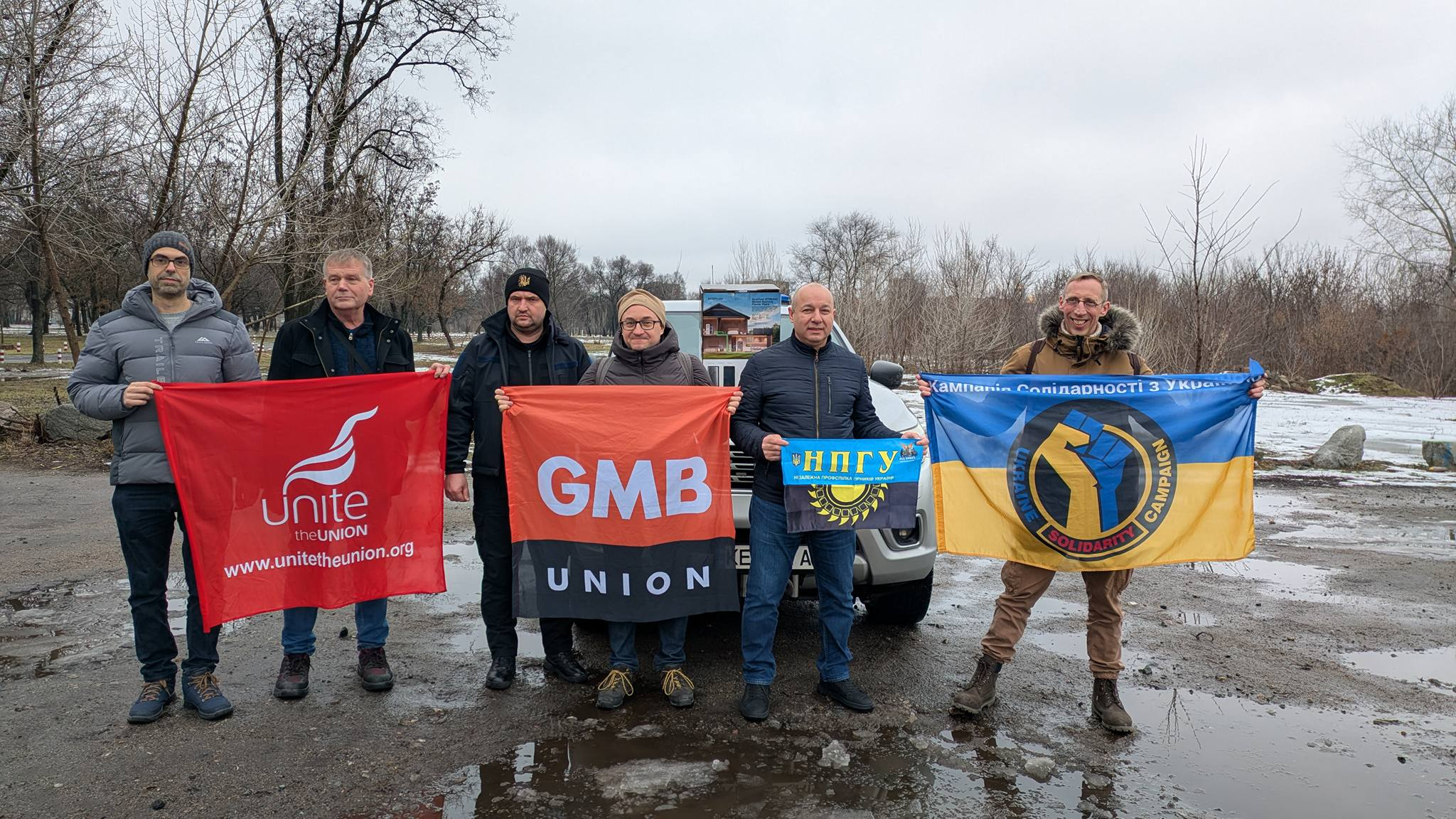
An aid mission by the Ukraine Solidarity Campaign to the Donbas has recently taken place, following an urgent appeal from the NGPU for essential supplies. Published here is a report by writer and activist Sian Norris was part of the delegation, which was funded through direct solidarity from UK trade unions – GMB, UNISON, UNITE, NAUTILUS, UCU, PCS and NASUWT. The mission delivered vehicles and vital winter equipment to NGPU members defending the city of Pokrovsk and positions on the Zaporizhzhia front. In addition, a significant consignment of medical supplies, funded by PCS and NASUWT, was provided to the Free Trade Union of Medical Workers in the Zaporizhzhia region for emergency stabilisation centres.
After a long journey, we arrived in Pavlohrad late on the night of 24 February – the fourth anniversary of Russia’s full-scale invasion of Ukraine. On the road that morning, at 9am, the traffic stopped in Ternopil as drivers got out of their cars to stand, in silence, and remember the fallen heroes.
Yuriy Kryvoruchko who heads up the NGPU (Independent Trade Union of Mineworkers of Ukraine) union in Pavlohrad, met us for a delicious and much-needed breakfast and coffee, before taking us into the city where we dropped off the aid. It was a time to see old friends such as Anatoly, who runs a paramilitary unit rescuing miners, as well as new comrades.
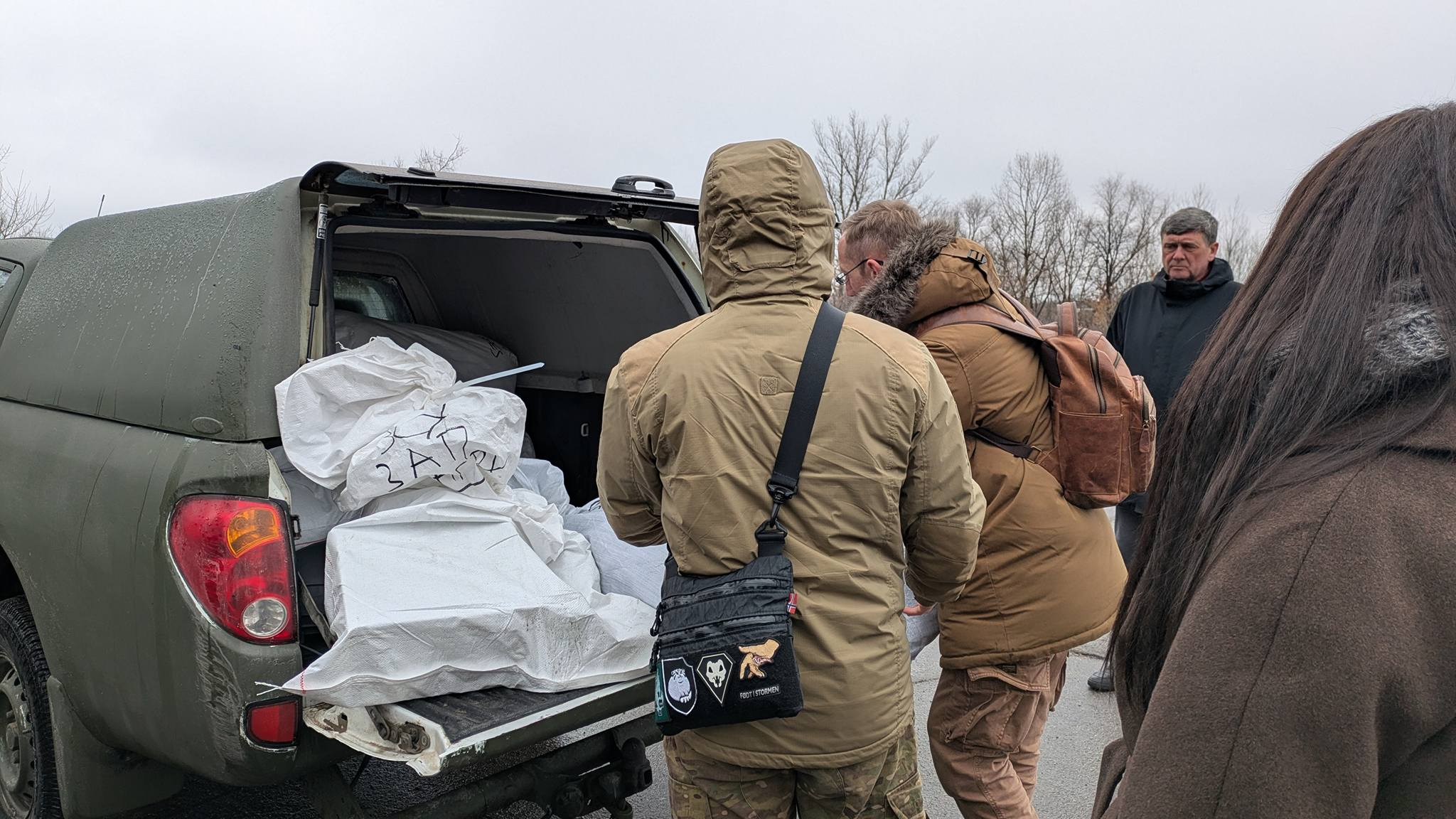
We brought two trucks full of aid including sleeping bags and medical supplies, and two ecoflow power packs that have proven a lifeline to Ukrainians in the harsh winter. The trucks and the aid would later go to Pokrovsk and Zaporizhzhia, supporting soldiers and medical workers in the Donbas.
Pavlohrad is designated as a city of heroes, with a strong mining community that works tirelessly to keep the lights on even as Russia relentlessly attacks energy infrastructure. The work of the mining union has changed since the start of the full-scale invasion. As well as fighting for workers’ rights, the union now helps mining families who have been displaced by the war, including those who have escaped the occupied territories or who have been evacuated from towns and villages close to the front and in the killzone.
We got a glimpse of the plight of those families, when we visited a “stabilisation” or transit centre for internally displaced people. Rescued and evacuated by brave volunteers, the families and elderly individuals arriving into the centre were often scared, disorientated and heartbroken at having been forced from their home. The NGPU and the KVPU support displaced miners and mining families with financial aid, psychological support, and help finding housing. The local government, which we visited later that day, now has a unit to support displaced people, which currently represent a quarter of Pavlohrad’s population.
These are families fleeing an ever-expanding killzone, as the growing use of FPV drones makes previous safe places into targets. To protect Pavlohrad and the surrounding towns from these deadly weapons is a 100km drone tunnel – nets covering the roads – that was constructed in three weeks. It is not finished. It will need to be longer, and volunteers are busy at work making sure the roads and civilians are protected by the miles of nets.
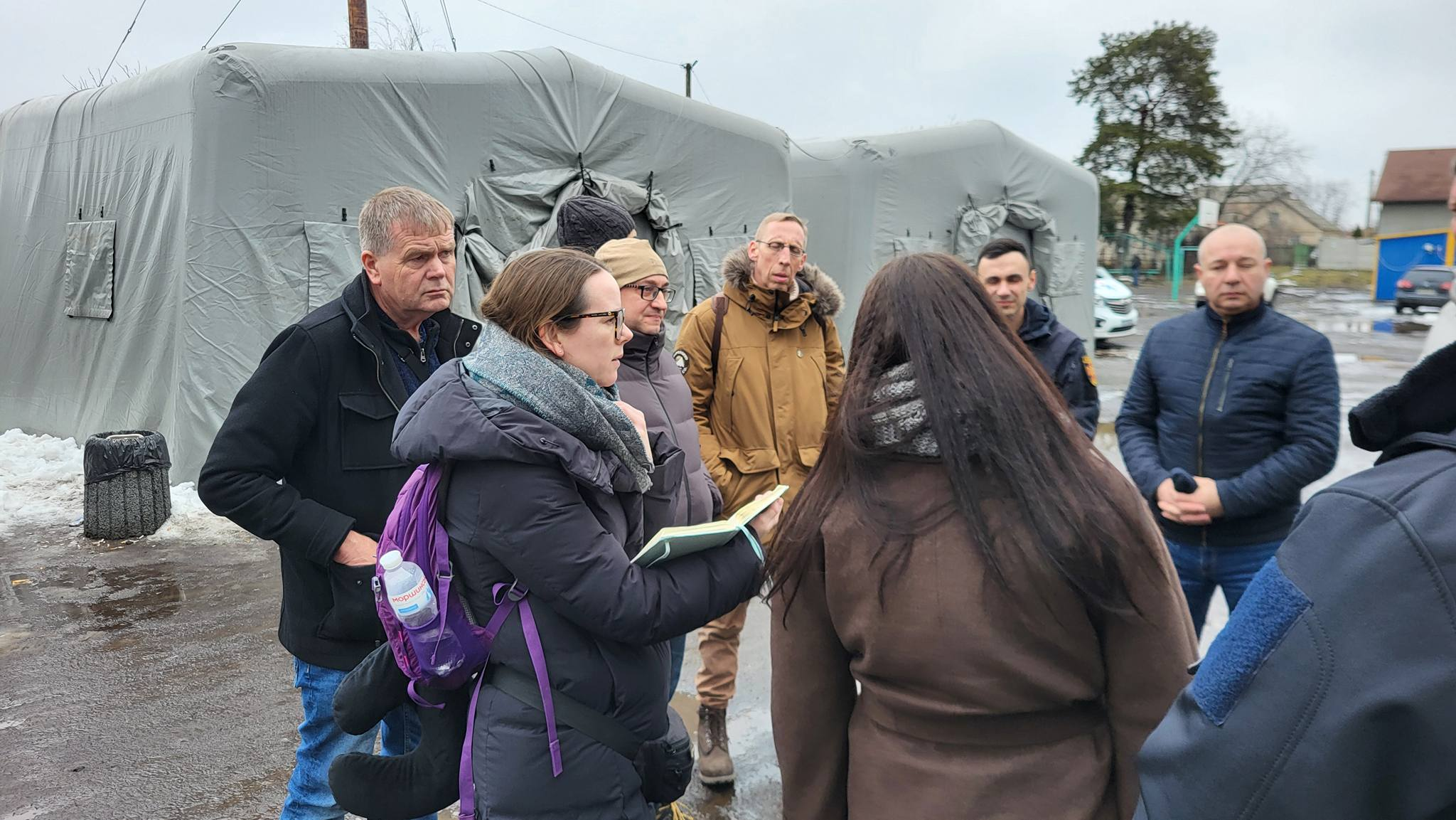
Anatoly, along with local councillor and former miner Andrii, took us to see the training centre where rescue workers learn the skills they need to take on the dangerous conditions inside a mine and rescue workers trapped underground. Like so many places in Ukraine, the centre doubles as a shelter. Rescues are incredibly dangerous: as one of the team put it to us, in a fire, the firefighters can step away. In a mine, you can only go forwards. The biggest danger comes from the build-up of gas which is highly flammable.
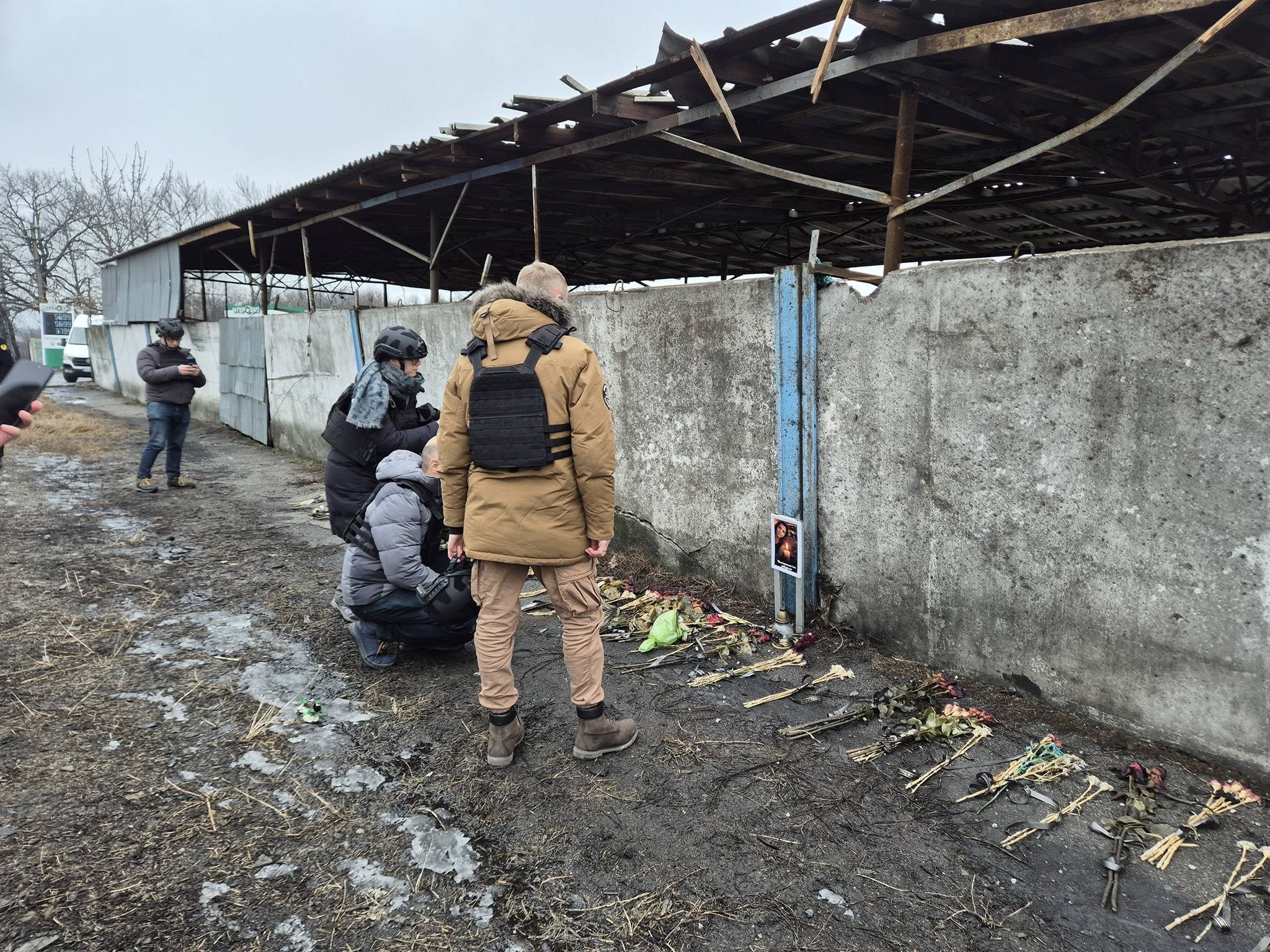
From there, we put on our helmets and kevlar vests and drove to the site where 12 people, mostly miners but one woman who worked at a nearby petrol station, were killed by a Russian drone attack. The drones hit their bus as they were leaving their shift. It was a stark reminder of the daily violence and danger that mineworkers face.
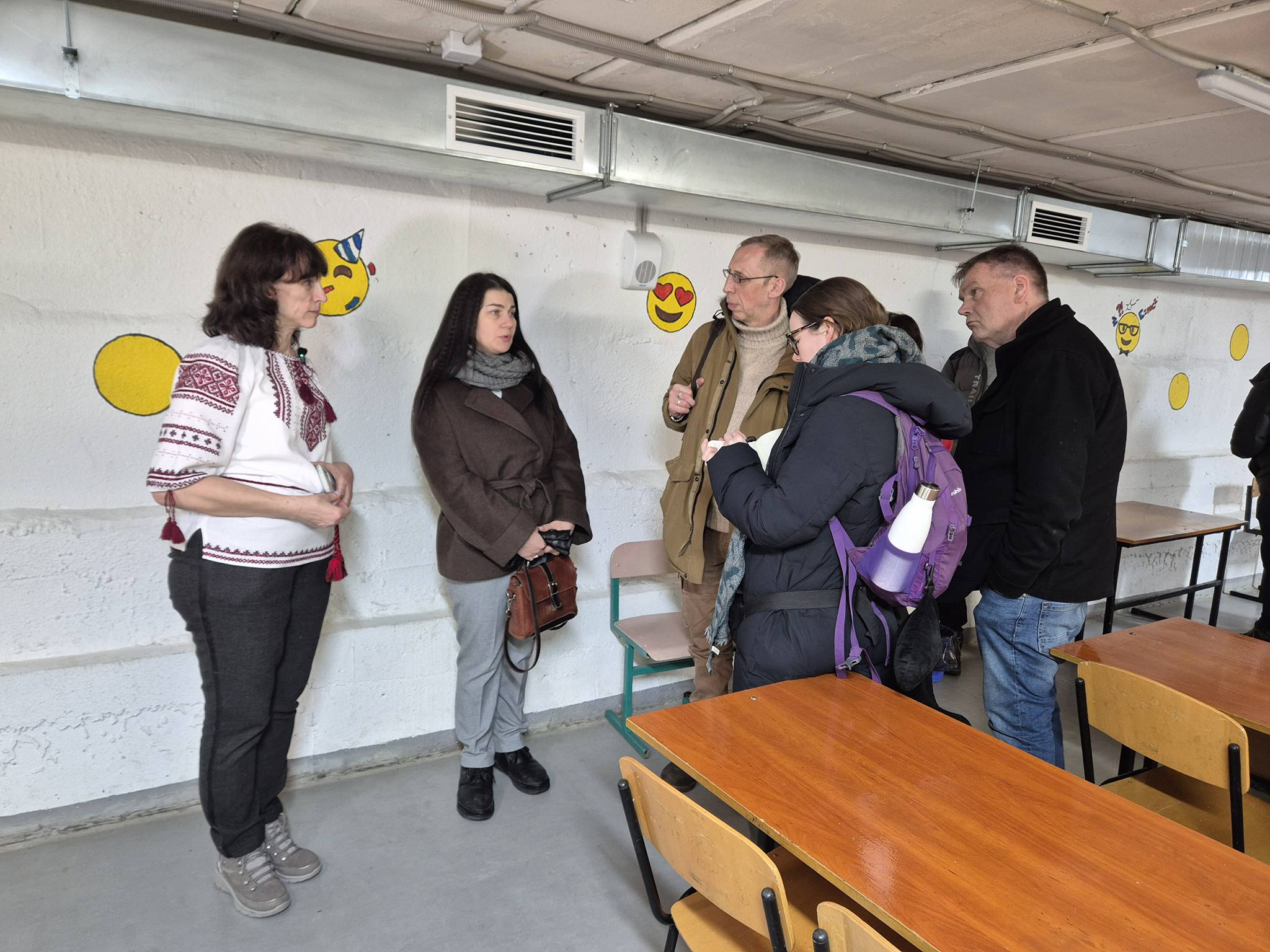
Our next stop was at the local school where we saw the underground shelters where the pupils can spend all day studying and learning. A group of students greeted us with a poem that they had learnt, all dressed up in their vyshyvankas. Their bravery and resilience was remarkable and deeply moving. Children are the forgotten victims of this war – separated from their fathers, losing loved ones, and missing out on a normal childhood. They grow up under the threat of drones, rockets, and missiles, studying underground in cheerful but cramped conditions. And yet they are determined to learn, full of dreams and ambitions and giggles and intelligence.
Kryvyi Rih is a three-hour drive from Pavlohrad, and we arrive on a cold and grey day. The temperature is about -4 but “real feel” -7, and the blackouts are almost constant. Our hotel doesn’t have a generator, and for one freezing night we experience what Ukrainians have endured all winter: sub-zero temperatures with no light and no heating. And this was warmer than most of the winter, when the thermometer dropped as low as -25.
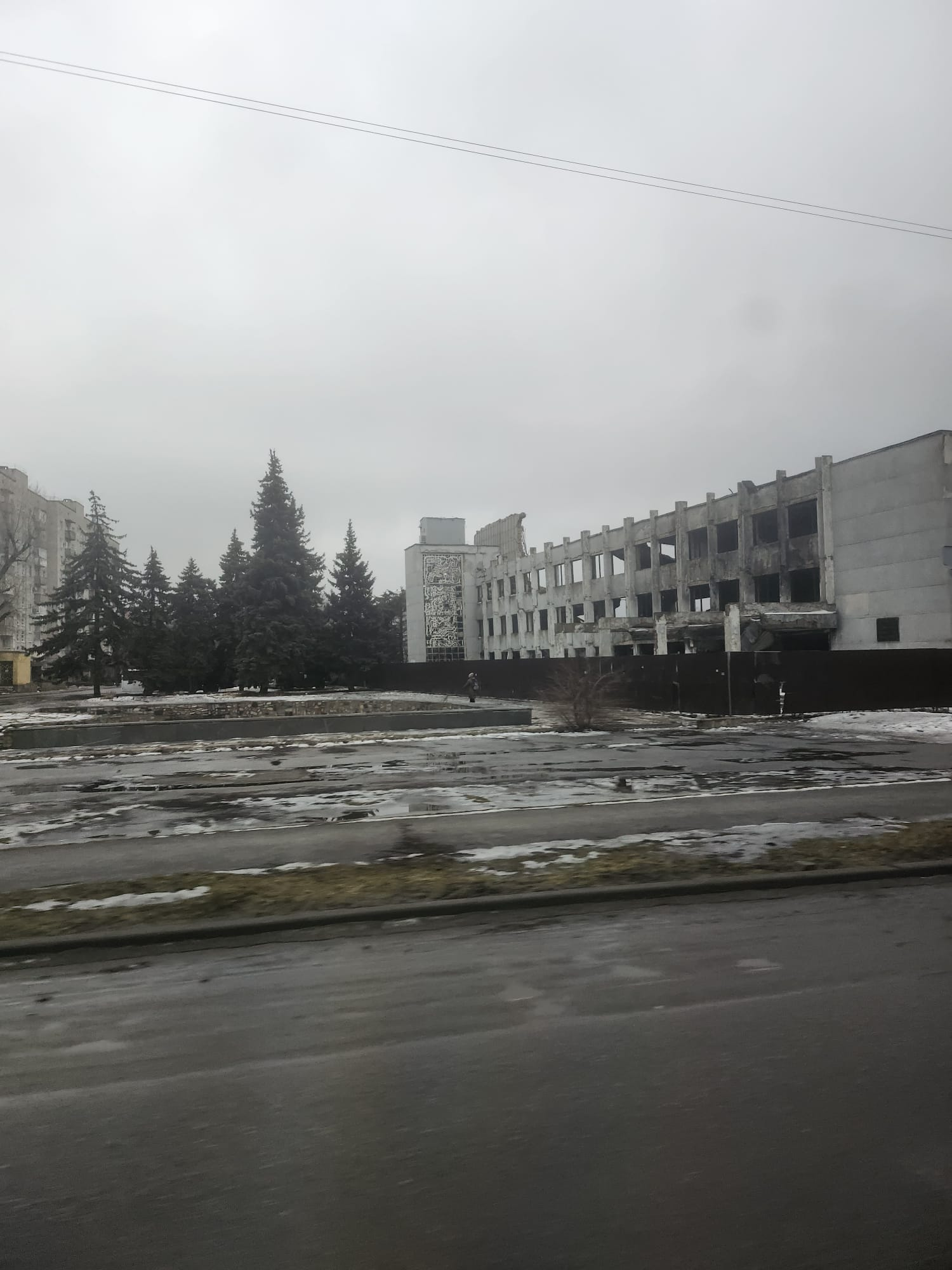
We met our comrades from Solidarity Campaign, who took us on a tour of the city, including to see the court house that was destroyed in a missile strike. Our guide, Sasha, knew someone killed in the attack.
The sun comes out after the freezing night, and Kryvyi Rih is beautiful under the blue sky. Snezhana Oleksu from Social Movement takes us to the school where she teaches and where the children are studying underground due to an air raid alert. She then introduces us to her English students, aged 7-14, and we had great fun helping them practice their language skills.
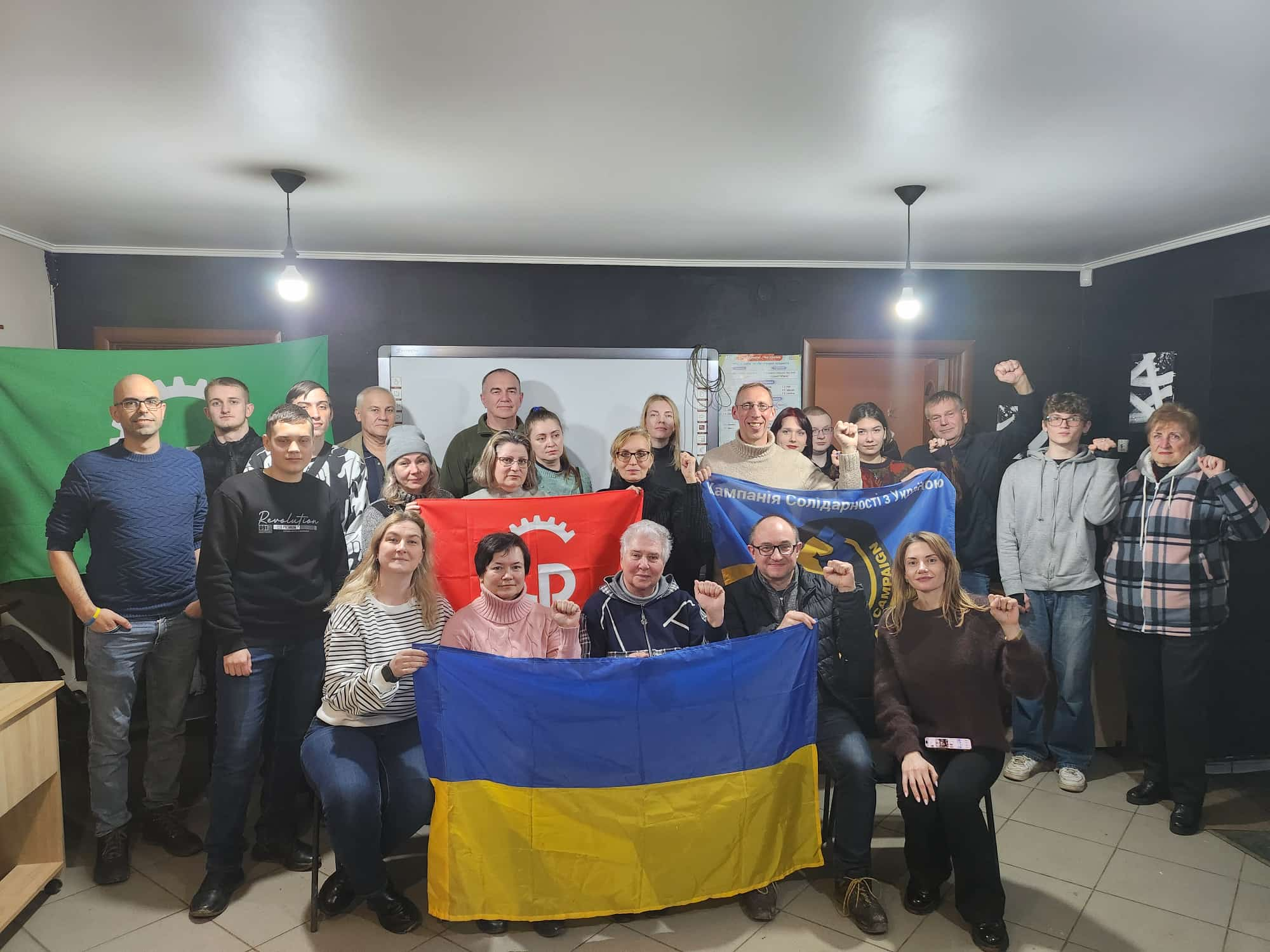
Snezhana explains that “Sotsialniy Rukh focuses on protecting social and labor rights during wartime. The movement advocates for workers, promotes social justice, and monitors labor law changes that may negatively affect employees. It also supports humanitarian initiatives and raises awareness internationally about the social consequences of the war in Ukraine.”
During the meeting, we hear from young people who take part in the solidarity meetings and activities. It gives them a sense of community and a chance to have fun, make friends and learn about new ideas. They’ve taken part in self-defence classes, trips away and discussions about politics. It’s so inspiring to see a young generation determined to forge a new future for Ukraine, one built on justice, rights and equality.
These are children and young people who dream of peaceful skies, of their dads coming home, of calm, of being able to go to school every day, of being able to go home to their cities which are now under Russian occupation. They need our solidarity, our care and our support. Most importantly, they need to be remembered. We must not forget Ukraine.
If you would like to read Sian’s reporting from this trip, you can find her articles here:
On her Substack: ‘We work to gather coal’: Ukraine’s mines are the war’s second frontline
On Krytika: Dispatch from Ukraine
On Conflict and Democracy: In a transit centre in Pavlohrad the horror of war is written on pensioners’ faces
 Ukraine Solidarity Campaign (Кампанія Солідарності з Україною)