For years, dirty Russian money has swirled around London
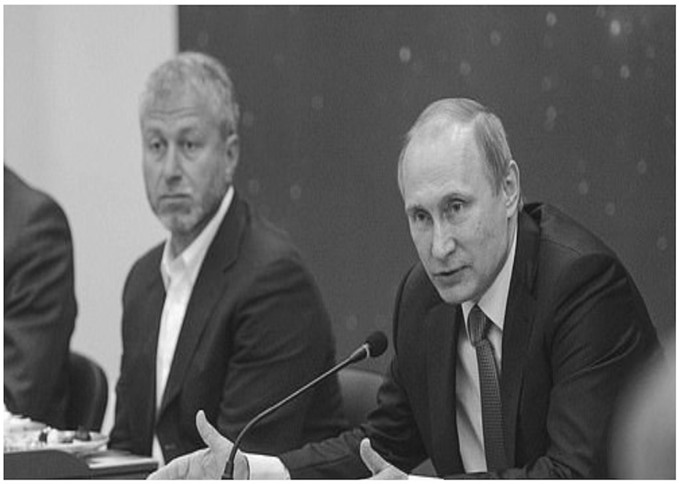
Oligarchs seeking to spend, hide and launder money extracted from the Russian state during the turbulent collapse of the Soviet Union found its way to Londongrad – reappearing as art collections, opulent city mansions and country houses, and political donations.
Eyerolls greeted questions as to why London’s economy was so welcoming to unexplained or barely explained wealth. Let the money roll in. Enjoy the spoils.
In 2012, the Conservative right formed its Friends of Russia group, which facilitated a ten-day, all-expenses-paid junket to Russia in 2012, paid for by the Russian tourist government agency, Rossotrudnichestvo. Guests included Conservative activists such as future Vote Leave chief Matthew Elliott. Members appeared on RT, the group was an opportunity for pro-Moscow lobbyists to use their links to Tories to increase their standing.
Even as Putin annexed Crimea and his little green men invaded parts of eastern Ukraine, the polite thing to do was look in the other direction. Then Putin launched his full-scale invasion of Ukraine, and suddenly the grubbiness of all that cash could no longer be ignored.
One of those facing sanctions in those early days of the big war was Roman Abramovich, best known for his ownership of Chelsea FC and for being a staple of society gossip columns.
At the start of the full-scale invasion, the government froze Abramovich’s assets, and required him to sell Chelsea FC, with funds from the sale to be used to support Ukraine. But that money is stuck, due to a legal battle taking place in Jersey.
More than £5.3 billion of the Russian-born oligarch’s fortune has been frozen by the Jersey courts since 2022, with the Jersey government launching an investigation into the source of the funds. Abramovich’s representatives say that £1.4 billion of the £2.35 billion resulting from the Chelsea sale cannot be released to a charitable foundation until the investigation and legal action are dropped by the Jersey government. And while this case rumbles on, Abramovich is failing to respect an order from Prime Minister Keir Starmer to release the Chelsea funds to support Ukraine before 17 March 2026. The oligarch believes the money should help victims on “both sides” of the war, something the UK government rejects.
Representing Abramovich in his legal case are the Conservative peer Lord Wolfson, former Trump adviser Eric Herschmann, Howard Sharp, a former solicitor-general of Jersey senior human rights barrister Maya Lester, and Richard Lissack and Andrew Stafford, who both have legal expertise in financial matters. Quite what Abramovich’s money issues have to do with human rights is not clear.
But it’s the presence of Wolfson that is raising eyebrows. The Tory peer was formerly under secretary of state in the justice department, and since being elevated to the House of Lords he now sits as the shadow attorney general, helping to formulate Conservative party policy.
Writing to Tory leader Kemi Badenoch, Labour’s justice minister Jake Richards raises questions about conflict of interest in Wolfson representing Abramovich in his case against the UK government – a case that is preventing life-saving funds reaching Ukraine.
“As Shadow Attorney General,” writes Richards, “Lord Wolfson has a crucial role in formulating Conservative Party policy. As a paid representative of Mr Abramovich, he has a financial interest in the question of whether and when Mr Abramovich’s assets are transferred to benefit the people of Ukraine.”
Richards goes on to ask a number of questions of Badenoch, questions that the Ukraine Solidarity Campaign also demands answers to. The first is to ask “does the Conservative Party agree or disagree with the government’s position” regarding the transfer of funds to support the people of Ukraine?
The second question Richards asks is “what role did Lord Wolfson play in formulating your party’s position, whatever it is,” on the issue of transferring the funds. He asks when Badenoch became aware that Wolfson was advising Abramovich, and, crucially, “do you consider it acceptable for a member of the Shadow Cabinet to have a financial interest in a case with a direct bearing on government, and therefore opposition, policy?”
That point about conflict of interest is at the heart of this row. It’s well known that barristers have to obey the “cab rank rule”, and everyone, even the most vile criminals, has the right to legal representation. But the cab rank rule does not remove conflicts of interest, or, as Richards writes, “eliminate the responsibility of politicians to avoid such conflicts.” At this stage, we do not know if Wolfson took the case because of the cab rank rule.
When it comes to the Conservative Party’s policy on releasing funds to support Ukraine, such a conflict must be considered. Can Wolfson advise the Conservative Party on its position on this crucial legal case, when he is also advising Abramovich on how to win? How can he provide legal representation to a man preventing funds from bringing humanitarian aid to Ukraine, while helping to formulate the Conservative Party’s response to such cases?
It’s important to remember that, while the Conservatives took the right approach to Ukraine at the start of the full-scale invasion, in the years leading up to the big war it welcomed donations linked to Russian money and Abramovich was known to have a close relationship with at least one Tory. If Badenoch does not respond to Richards’ questions, and takes steps to understand the conflict of interest involved with Wolfson representing Abramovich, then it will prove a real setback in the party’s reputation and throw into doubt its commitment to Ukraine.
While Abramovich appeals against the courts’ decisions about the funds, secure in his wealth and status, Ukrainians are dying on the frontlines and in their homes. They do not have the chance to appeal their death sentences, imposed on them by Russia.

 Ukraine Solidarity Campaign (Кампанія Солідарності з Україною)